

Conference management software for universities and research institutions
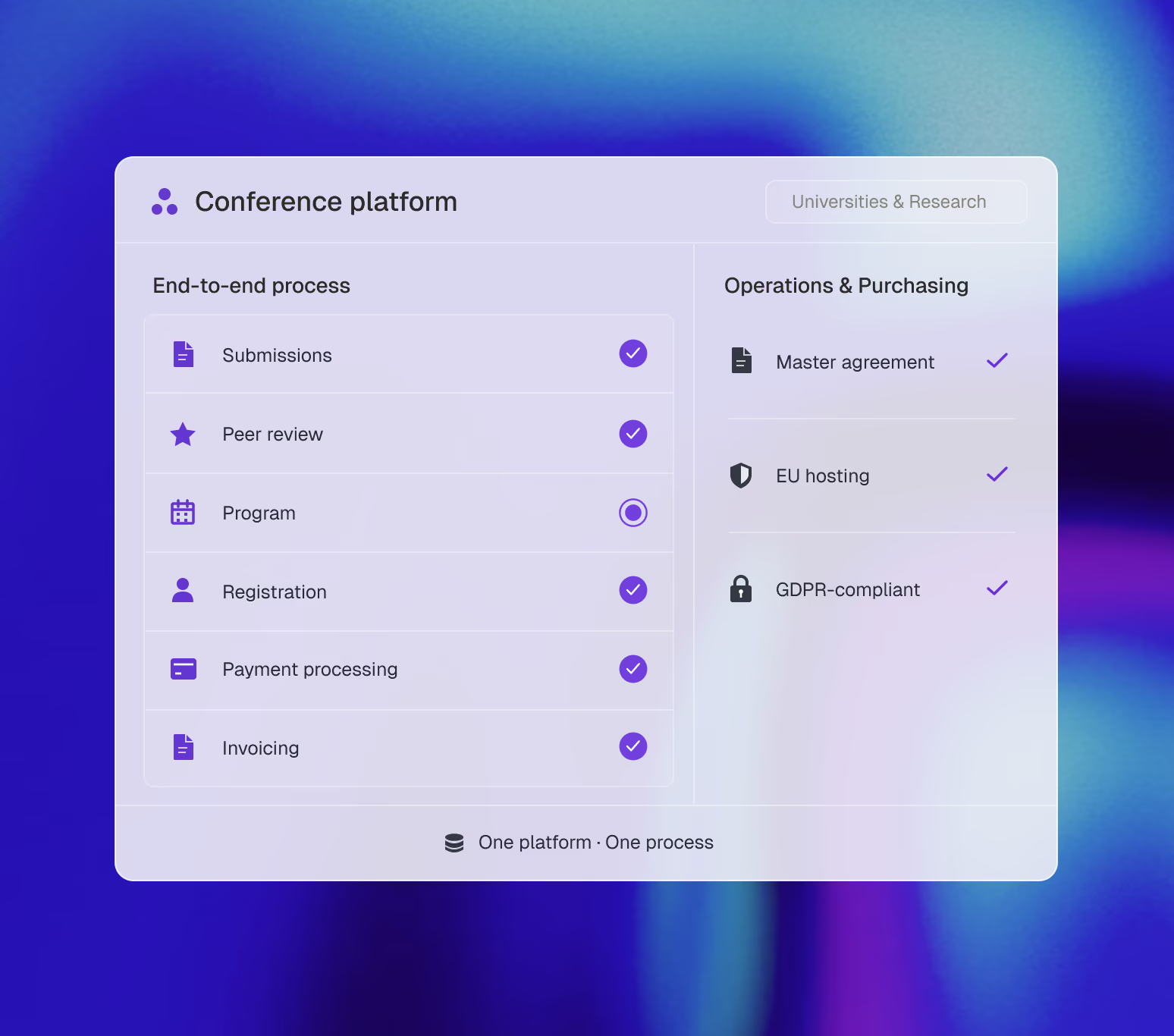
Converia integrates abstract submission, peer review, program planning, registration, payment processing, and invoicing into one seamless workflow. The software is compatible with university procurement framework agreements, hosted in Europe, and GDPR-compliant.



























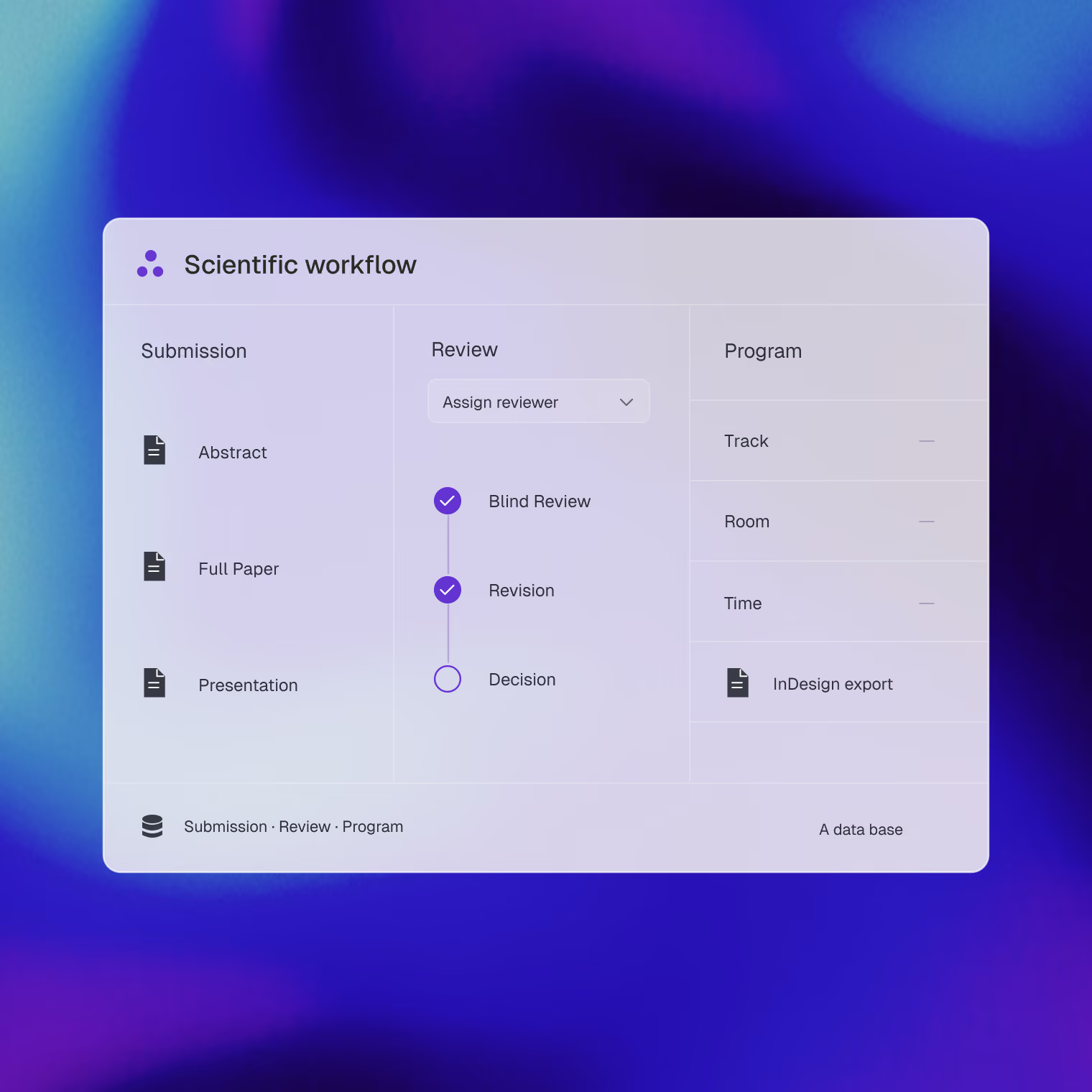
Unify submission, review, and programming on a single data platform.
Scientific conferences require more than just ticketing and room scheduling: managing hundreds or thousands of abstracts, multi-stage reviews, and parallel tracks requires seamless integration. Converia covers the entire scientific process from start to finish—even for chairs organizing their first event without templates or established routines.
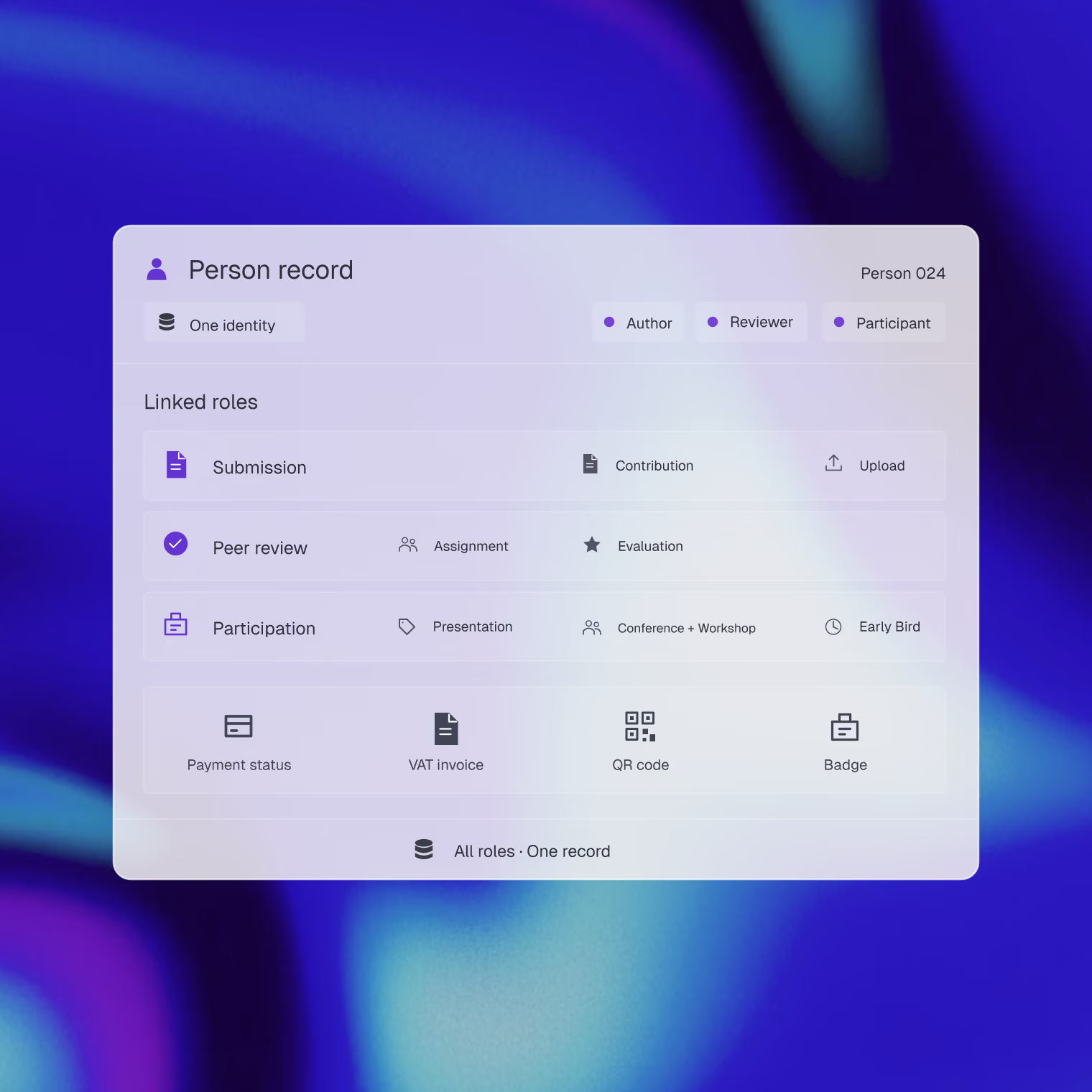
Consolidate all of a person's roles into a single record.
At scientific conferences, one person often takes on multiple roles: submitting a paper, reviewing others, and attending as a participant. Using separate tools leads to duplicate data, unnecessary follow-up questions, and missing proof of eligibility at check-in. Converia connects these roles through a central person database with integrated role logic.
Integrate procurement, compliance, and consulting into your system.
For universities, software alone is not enough. Procurement, data protection, and accounting must also be aligned. At Converia, these requirements are part of the setup—complemented by personal advice based on over 20 years of experience with scientific conferences.
A system for the entire conference
Before the conference
- Manage call for papers, reviews, and program scheduling
- Set up conference website from templates, copyable for the next edition
- Set up registration, pricing plans, and early-bird logic
- Create invoices and manage communication via email templates
During the conference
- On-site check-in with QR codes, self-service terminals, and badge printing at the counter
- Conference app with live program and personal schedule, available offline
- Conference website with automated online program schedule
After the conference
- Export conference proceedings to InDesign
- Issue participation and CME certificates
- Evaluations, data exports, and invoicing exports to the
- Carry over structures and data for the next edition, even when moving to a different university
An individual solution for every requirement.
Since 2019, Converia has helped our small team optimally organize and execute our annual congress. We particularly value the personalized support we receive from the Converia team whenever we have specific requirements.
For the past 5 years, Converia has helped us reliably organize and execute both our major annual conference and our smaller events under our framework agreement. Since then, our processes have become much more structured, and our workload has been significantly reduced.

Congress management is more than just event management – it is about translating complex requirements into reliable structures and clear processes. Converia has been supporting us for ten years in professionally managing our medical congresses and implementing them with organizational efficiency.

We received exclusively positive feedback from the participants.
Converia was our lifesaver.
Converia is a very user-friendly software with numerous features that support effective conference organization.
Frequently Asked Questions
Can Converia be used under a framework agreement for our procurement?
Yes. Converia can be configured as a framework agreement for university procurement – including for conferences that recur annually or are shared between institutes and faculties. This means you don't have to go through the procurement process for every single event. We will clarify what the specific agreement for your institution looks like during a consultation, taking your procurement regulations into account.
We are organizing a conference for the first time. Can we get some support?
Yes. Our setup includes personal consultation from experts who know the conference business inside out—no anonymous helpdesk here. We walk you through every step of the conference process, configure the setup together, and can even be there in person at the registration desk if you wish. First-time organizers especially value this, as it means they don't have to start from scratch. The team behind Converia has been supporting scientific and professional conferences for over 20 years.
The conference will be hosted at a different university next year. Is that possible?
Yes. The next edition is created by the organizing team copying the previous year's conference – including forms, settings, and personal data. You can use the program structure, registration rules, and pricing as a template instead of building them from scratch every year. Whether personal data can be transferred to an organizing team at a different university depends on the setup, but in many cases, this is possible. We will clarify the details during our consultation.
Does Converia support true double-blind review?
Yes. The review process is conducted online and in multiple stages, using either a blind or double-blind method. Reviewers are assigned automatically based on defined criteria or manually, while section chairs manage the evaluation of specific subject areas. You define the assessment criteria yourself—ranging from grading and predefined answers to free-text fields and decision recommendations. Submissions can be made as plain text, formatted text, MS Word, PDF, or LaTeX.
Where is our data hosted and processed?
Our servers are located in a European data center that is ISO 27001 certified, and all processing is GDPR-compliant under a data processing agreement. Backend users can log in via single sign-on, Shibboleth, or LDAP using their existing university account. We provide the necessary data protection documentation for your administrative office, and any data you no longer require after the conference can be completely deleted.
How do these invoices help us with administration?
Invoices are generated in accordance with the German Value Added Tax Act (UStG) and can be issued to either the institute or the participant as a PDF on your own letterhead. For accounting purposes, exports and existing interfaces to DATEV, Sage, and SAP are available, allowing university administration to continue working with their familiar systems. Reverse-charge for intra-European B2B transactions is supported. The creation and delivery of e-invoices will be available shortly.
How much effort is involved in switching from Excel and our current tools?
The transition doesn't happen in one leap. We usually start with the next conference, rather than mid-event. Importing data from Excel, legacy submission tools, and attendee lists is all part of the onboarding process. A realistic timeframe is 4–8 weeks, depending on complexity.
If our university hosts multiple conferences, can we see them all at a glance?
Yes. You can run any number of conferences within a single system, each fully customized to your corporate design and domain. Multiple conferences, seminars, and congresses hosted by your institution can be bundled into a branded overview portal, organized by department or event type—providing a central hub instead of scattered individual pages.