


1. Less effort
The significantly reduced workload is certainly the most compelling argument for outsourcing payment processing. Especially since it starts costing the organizer valuable time long before the first attendees even register. The problem actually begins with the selection of payment methods that the organizer accepts.
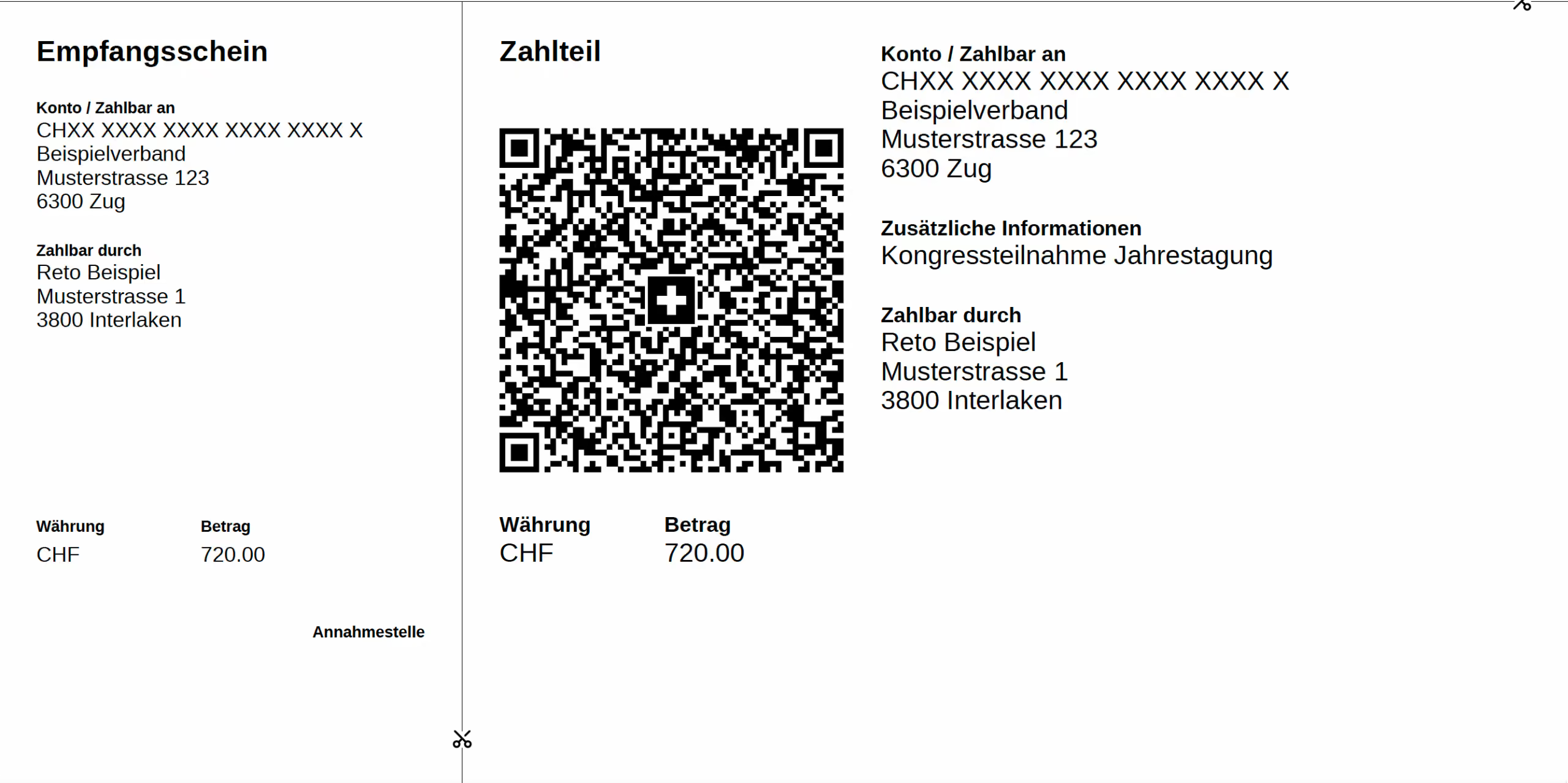
Making bank transfers the only option might work for a conference where it is clear from the start that all attendees are coming from Germany, but even then, it is risky. For many, the payment method has long since become a deal-breaker for participation. Some prospective attendees prefer payment methods that are more convenient for them, but slightly more complicated for the organizer to set up, such as credit cards and Apple or Google Pay.
Anyone who has never dealt with the formalities of setting up these payment methods will likely be surprised by how much is actually involved. It becomes particularly complex if the organizer wants to offer credit card payments. Among other things, this requires entering into an acceptance agreement with an acquirer who will later process the payments. This incurs fees that are sometimes completely out of proportion to the size of the conference, which is something organizers of smaller events should definitely consider.
As soon as credit card payments are enabled, the next difficulty is often not far behind. Organizers who have not previously offered a credit card payment option and may not be very familiar with it run the risk of falling victim to fraudsters.
If, on the other hand, the software provider handles payment processing, they are usually already familiar with typical fraud patterns and can more easily identify signs of a potential fraud attempt. In addition to the security aspect, organizers will likely appreciate that they only need to select their preferred options from the available payment methods. The software provider handles all associated formalities. This makes it unnecessary to conclude a separate credit card agreement yourself. Furthermore, there are no long waiting times while contracts are finalized and payment processing options are set up.
2. Automation included
Even though this saves a considerable amount of time, the benefits of having your event management software provider handle payment processing don't end there. Much of the process can be automated – provided, of course, that the organizer wants it to be.
For instance, receipts and tickets do not need to be created and sent individually for every attendee. In the software settings, you can specify whether these should be sent automatically. To make it easier for recipients to identify the documents, it helps if they are generated in the organizer's name and designed according to their branding guidelines.
Hiring another external service provider for payment processing therefore makes little sense. Since attendee data is captured in the system during registration anyway, it can be used immediately for other functions, such as on-site check-in or for messages the organizer sends to attendees. Consequently, personal data does not need to be entered again or transferred to another system.
3. Real-time status updates
Payment processing is not a process that should take place entirely in the background. Just because you aren't managing the payments yourself doesn't mean you should be kept completely in the dark until the end of the registration period, only for the details to be revealed then.
How many people have already registered? How many payments are still outstanding? Are the early-bird discounts actually being used? Regular interim reports would be a good way to answer these questions. An online-based solution is even better. The best way to track whether your conference promotion efforts are paying off is to monitor them live. The software provider sheds light on the situation with a snapshot that can be accessed at any time, containing all the key figures on bookings and payments that are important to the organizer.
Once the event is over, the revenue arrives in the organizer's account shortly thereafter, and they receive a detailed settlement.

4. Transparent cost structure
The decision has been made, and the software provider is now responsible for payment processing. Does the university hosting a conference with 2,000 visitors pay the same as the research institute whose symposium has only 250 people on the attendee list? Is that fair? Probably not.
With a fairer cost model, costs are only incurred when someone registers. Billing is therefore per attendee, which means the research institute would pay significantly less in this case.
Ideally, the final statement includes a breakdown of individual items, allowing the organizer to see exactly how much they are being charged for payment processing. Even better – because it is even more transparent – are providers who explain in advance which costs apply for what.
5. No certification process required
When it comes to registration and, above all, payment, highly sensitive personal data is involved that must not fall into the wrong hands. With online credit card payments, however, that can happen very quickly. To protect data from theft and misuse, there is a data security policy for processing credit card payments (PCI DSS – Payment Card Industry Data Security Standard). This covers all essential standards for the storage, processing, and transmission of card data. In principle, anyone offering credit card payments must be PCI certified.
While this makes sense, it unfortunately comes with a catch. Certification is not only time-consuming but also quite expensive. However, not having it can be costly too—not to mention the damage to your reputation. In the event of a breach, you face potential fines or the termination of your merchant agreement.
Organizers who outsource payment processing, on the other hand, do not have to worry about these issues at all. If the service provider is already PCI certified, card data can be processed securely, and the organizer does not need to take any further action.