

Plastic badges
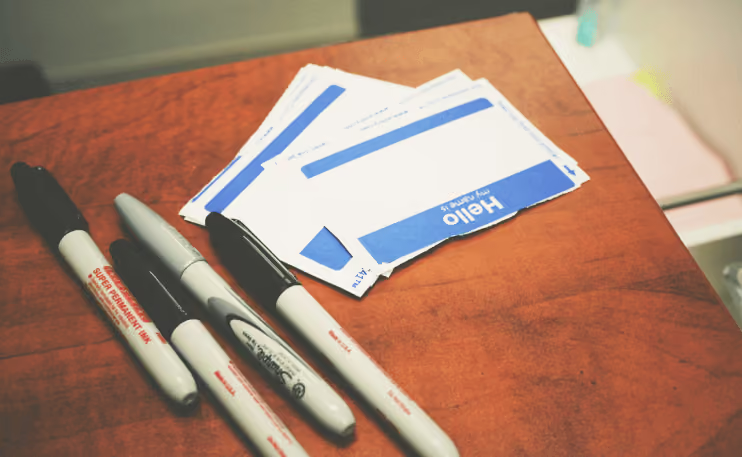
When organizers prioritize durability, they often stick to their principles and opt for the solid plastic version. These maintain their high-quality appearance despite wind, weather, and other adversities.
Advantages of plastic badges
1. Durable
Unlike simple paper versions, plastic badges have enviable resilience. After a multi-day conference, the name tag still looks as pristine as it did at the start. It doesn't crease, wrinkle, lose its shape, or become illegible – provided you have chosen a comfortably readable font size for the badge.
2. Water-resistant
A plastic badge easily forgives minor accidents. Even if a drink is spilled, you can simply wipe the name tag off and the mishap is forgotten. Raindrops that catch participants off guard during their lunch break simply bead off the surface.
3. Interactive
Not enough room for all the info on the badge? QR codes can help. After scanning, participants are taken directly to the program or can share their contact details with others without having to fill out a contact form.
Disadvantages of plastic badges
1. Plastic is a single-use product
Perhaps the most serious aspect of plastic badges: they are not sustainable at all. Plastic name tags primarily create waste—and are therefore a red flag. They signal that the team behind the conference is being wasteful. Don't be surprised if some participants take issue with this, which could tarnish the otherwise good reputation of your conference. If you must use PVC, it is better to choose the recycled version.
2. Printing is slow
If you use plastic name tags, it is best to produce them in advance and hand them out to participants on-site. Compared to paper badges, printing takes more time. If you want information on both sides of the badge (pro tip: this is always a good idea), it takes a little longer. If you still want to do this on-site, make sure to plan for enough check-in stations and badge printers.
3. Costs are high
High quality comes at a price. Cost-conscious organizing teams prefer to steer clear of them, scoring a double win: saving money and keeping a mountain of plastic out of the conference.
Quick info: Plastic badges
💡Plastic badges give a conference a high-quality image. For this to pay off, organizers need to put in a bit of prep work.
🖨️Important: Match your badge printers to your plans. This is often a bit more expensive, so plastic badges are not ideal for conferences with registration numbers in the low hundreds.
Paper badges
As a base material, paper might seem a bit boring at first. That impression vanishes as soon as you realize that paper name badges are so versatile that you will have a hard time picking a favorite.
Advantages of paper badges
1. Comfortable
They are definitely nice and light. This makes them badges that attendees enjoy wearing because they don't get in the way, even during multi-day conferences.
2. Customizable
Various sizes, butterfly badges for folding, with or without a holder, combined with lanyards or clips: with the multitude of options, there is something suitable for every organizing team. Another interesting question here is what the front and back of the badge look like. We recommend: Print them identically. That way, it doesn't matter if the name badge flips over, which happens often when attendees wear them around their necks.
3. Sustainable
The point clearly goes to paper badges. The only question left is: how sustainable should it be? In addition to name badges that are simply folded rather than glued, there are badges made from recycled paper or seed paper, which can even bring new life to a flower pot after the conference.
4. Affordable
Neither design, production, nor printing involves any special effort with paper badges. The fact that they don't require a high-tech setup is reflected in the costs. This makes them a truly cost-effective opportunity for organizers who want to try out on-site printing for the first time.
Disadvantages of paper badges
1. Fragile
How durable a name badge is depends heavily on the paper and the type of badge. Cost-conscious organizers will find self-adhesive paper labels to be the cheapest option, but they have to make significant compromises in terms of durability. Some are so delicate that they don't even survive a single conference day. By the next day at the latest, a new badge has to come out of the printer. Fortunately, this doesn't happen with the sturdy, tear-resistant version. It doesn't make it much more expensive, either.
2. Unfinished
Paper name badges are more flexible than other materials—and therefore carry a risk. This is related to the fear of on-site printing. Some teams are still hesitant: too much technology, too prone to errors, too little control over what comes out of the printer.
However, the "just give it a try" motto is worth it for conferences where people can register on-site. Otherwise, they are left with nothing but unfinished name badges to fill out by hand. But what if the ink smudges or no pen writes properly on them? Or what if all the pre-produced badges go to waste because only the people who were already registered show up?
3. Pseudo-sustainable
Even seed paper can harm the environment. Your conference won't win any sustainability awards with badges shipped in from the USA or Australia. The same goes for standard plastic holders, which are often combined with paper badges. If the paper is sturdy enough, you don't need them at all.
♻️There is, of course, a truly sustainable way to do it - we have put together some tips for eco-friendly badges here.
Quick info: Paper badges
💡Paper is patient, but event organizers in the heat of check-in are not. Especially without a solution for the badges! Name tags made of paper keep things moving quickly. Prerequisite: You have matched the paper type and printing method to the number of attendees, effectively preventing chaos from entering your conference.
RFID badges
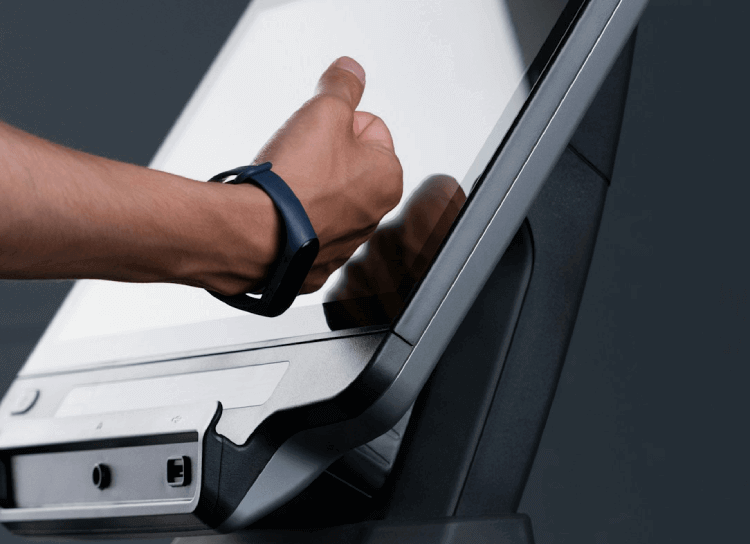
Some conferences take place in strictly confidential circles, while others simply enjoy experimenting with what is technically possible. In those cases, there is a high chance you will encounter RFID name tags. Similar to credit cards, these badges have an integrated microchip. On-site, it helps attendees handle various tasks.
Advantages of RFID badges
1. Unlocking advanced conference levels
An RFID name tag is more than just a badge that attendees hang around their necks. They can also tap it at touchpoints to check themselves into sessions or gain access to restricted areas.
2. Experiencing greater security
At events with high security requirements, RFID badges can really show their strengths. Such a badge acts as a kind of double agent: it tells other attendees who they are talking to, and it tells organizers during a check whether the person is actually allowed to be there. Every one of these checks is performed via the RFID badge. Manual verification and the associated human errors are eliminated, and unauthorized persons are kept out.
3. Lead capture
Particularly interesting for conferences where sponsors are on-site and collecting contacts: just tap the name tag briefly, and the attendee's contact details are sent to the sponsor. This might be a way for them to collect leads from people who would have found it too much effort to fill everything out by hand.
4. Data collection
Which sessions were the most popular? Were there any that appealed primarily to younger attendees? How many leads did the sponsors collect during the conference? RFID generates a massive amount of data that helps you plan future conferences more precisely and tailor them to the wishes of your attendees.
Disadvantages of RFID badges
1. Data collection
Wasn't that an advantage just a moment ago? When used in moderation, it is. The GDPR puts a stop to overambitious organizers before they turn into data-hungry monsters. Please be careful here and inform attendees about which of their data is being collected, shared, stored, etc., when and for what purpose. If you want to measure a lot, you need permission first. If that is missing, the best technology in the world won't help.
2. Costs & effort
Anyone who has never worked with RFID badges before must first familiarize themselves (and their team) with the technology. What should attendees do on-site? How do the software and hardware work together to ensure checks run reliably? How are the badges set up? Quite a few questions – please plan for plenty of time, which must not be missing elsewhere.
3. Specialized hardware
Another question that requires thorough preparation: which hardware is the right one? For example, the printer for the name badges must be equipped with an RFID unit. In addition to the regular information on the badge, it must be able to transmit the data stored on the RFID chip. Are additional features needed for increased security? Not all printers can handle that.
4. Potential for failure
RFID badges are practical as long as the technology works. If it fails, it disrupts all the carefully planned on-site processes. Having a backup emergency plan in your pocket will save the conference. However, it takes time to set one up.
5. Environmentally friendly?
A clear no: In combination with plastic badges, RFID features are only seemingly smart because they are not sustainable. The credit card argument doesn't hold up here, because a credit card stays with you for a few years longer than a conference name badge. Organizers don't have to forgo these features if they care about the environment. RFID tags are also available without plastic. Currently, however, they are more common as wristbands. Perhaps paper is better for name badges after all?
Quick info: RFID badges
💡 RFID badges are not recommended without careful consideration. Weigh the benefits for participants against the effort involved. Trying them out is a good idea, but without the necessary buffer time, it's a risky business.
Electronic badges
A conference may be as digitized as possible, but the name badge remains completely unimpressed by this. While digital tools help organizers with the creation process, as soon as it comes out of the printer, the badge is still tied to the analog world. RFID badges hover on the threshold of the digital, but only electronic name badges truly cross over – and they are special in every respect.
Advantages of electronic badges
1. Endless possibilities
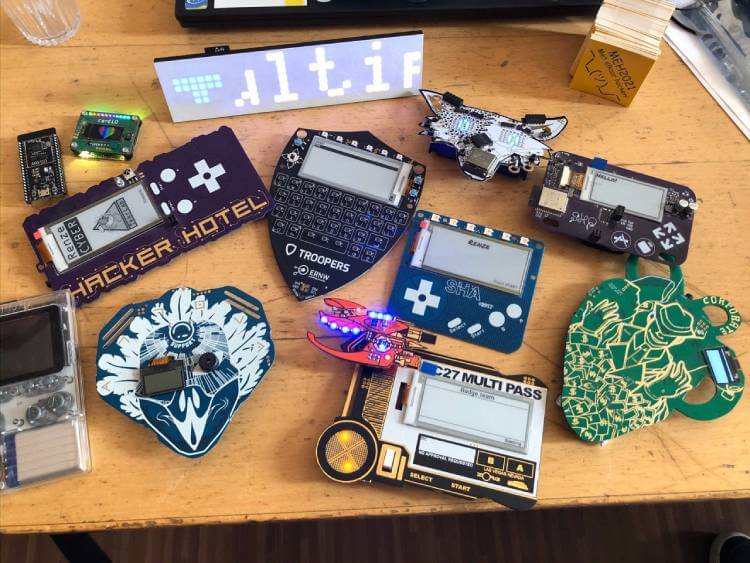
What should an electronic name badge be able to do? The more items on the wish list that the badge creators can implement with their programming skills, the more versatile the result. Participants can use their badges to vote in polls, provide feedback on presentations, or signal that they want to speak. The name of the person who wants to ask a question is automatically displayed on the front for everyone to see.
2. The badge as an art form
Creative organizing teams who enjoy tinkering often turn the conference badge into a DIY project and really let their imagination run wild. The result is name badges that truly deserve the label "individual" and become a conversation starter and eye-catcher on-site.
3. Interactive badge crafting
Why not involve the people who will be using the electronic name badge anyway? Incorporate a badge hackathon into the program and task participants with developing new features for the badge. These will then be officially available for the entire conference community the following year, who will be happy to join in again.
https://www.youtube.com/watch?v=7fXuVUFoAXI
Disadvantages of electronic badges
1. Preparation is everything
Off-the-shelf electronic badges haven't really caught on yet. Fortunately, because that would have largely put an end to original ideas. But you still need those ideas in the first place, along with someone to implement them. What should the badge look like? How should it behave?
Do not underestimate the effort involved in terms of hardware and software, despite open-source resources. You are primarily organizing a conference. The badge is just a tiny part of it. That balance shouldn't be reversed when using an electronic badge.
2. Please handle data with care
As practical as the special features of an electronic badge may be: things get critical as soon as personal data is involved. Are attendees exchanging contact details via their badges? Then they must be informed about where and how their information is stored—and be able to decide for themselves if they are comfortable with that.
3. It must work
If an RFID badge has a hiccup, the situation is serious. There is one small silver lining: even if all the technical bells and whistles fail, it at least still displays the person's printed name. If an electronic badge fails, however, then the name is gone too, and the badge is completely worthless.
Quick info: Electronic badges
As a piece of genuine craftsmanship, an electronic name tag adds value for attendees and provides recognition for the conference. If everyone appreciates this, the immense effort in preparation and production pays off tenfold. However, this primarily requires a niche community and a conference on the scale of DEFCON, where electronic badges are standard practice.
What's next?
- What belongs on a conference badge?
It should be large enough and legible, but how colorful should it be, and what information has no place on a badge? Is it better to use stickers or lanyards? Our article on the topic will help you keep track of the countless variations. - Making badges more sustainable
Did you know that the material isn't the only factor in whether a name tag is sustainable? Find out why the font used also plays a role here. - No more pre-producing name tags
Would you like to avoid printing and sorting badges before the conference starts? What if the badges were printed automatically on-site? And the sorting was eliminated entirely?