

This article dates back to a time when we were first considering gender-inclusive language. We have since found a solution that is now an integral part of our software. To see what it looks like and why we chose it, read our more recent article on the topic of gender-inclusive language in conference software.
Why is this so important anyway? Can't we just sit the issue out and do nothing until some kind of consensus is reached? Sure, but that would be hard to reconcile with our general view of conferences as places of encounter, exchange, and progress—places that produce better ideas the more voices are heard. Given the numerous current discussions about all-male panels ("manels") or initiatives standing up against harassment of female participants, doing nothing would also convey the impression that the status quo is set in stone. Language, in particular, is a powerful tool for bringing those who don't always feel addressed out of invisibility. And if language isn't inclusive, can the conference be?
No consensus
The motivations are clear enough. Unfortunately, the same cannot be said for the practical implementation, as the approaches, suggestions, and arguments for or against individual variants are diverse and, above all, contentious. Since we support many scientific conferences, we want to try to find a solution that is as uniform as possible for all universities working with Converia. These institutions usually publish their own guidelines for gender-inclusive language with useful tips, but much like the Duden dictionary, there is no single all-encompassing form—and it quickly becomes clear when reading that one probably doesn't exist. Situational decision-making is required, as the individual options are more or less suitable depending on the context.
Who should be addressed?
When searching for the most inclusive variant, the one that takes the trouble to name everyone being addressed would likely come out on top. No one is left out, nothing is shortened, everyone is satisfied? For example, consider the following sentence as an excerpt from an email: "We would like to ask the reviewers (male and female) to complete the evaluation of the conference contributions submitted by the scientists (male and female) by the specified deadline."
The idea behind it is good, but the example shows that, despite its exemplary nature, texts become harder to read when both variants are always placed side by side. If this pattern runs through the entire text, it sometimes makes it veeeery long. As a one-time salutation, however, the paired form is certainly suitable. If you find this superfluous because your own event only features male reviewers judging contributions from only male scientists—well, then your conference actually has a much more urgent problem than the wording of the salutation.
Everyone!
The simplest form of gender-inclusive language remains the masculine form throughout, supplemented at the end by a note in the smallest possible print that women are, of course, included. This would immediately put a stop to those concerned with correct gender-inclusive language (and especially their potential criticism), because someone has at least addressed the topic—case closed. But as soon as this turns into a generic feminine, as happened a few years ago at the University of Leipzig, it quickly brings a few men onto the scene who suddenly feel marginalized by the unfamiliar new "included" role. In and of itself, this is a good tactic for testing the tolerance threshold of others, but strictly speaking, it is not a perfectly balanced solution because one of the two groups always draws the short straw when it comes to being addressed.
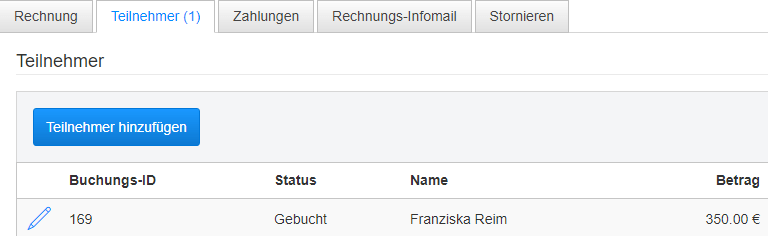
In Converia, the generic masculine is currently still the standard in some places. If we were to decide on alternative formulations without exception, such as "list of female participants," our support team would likely soon be faced with the question of where the list of male participants is—which wouldn't be all that far-fetched, as the feminine form is not the standard in everyday life.
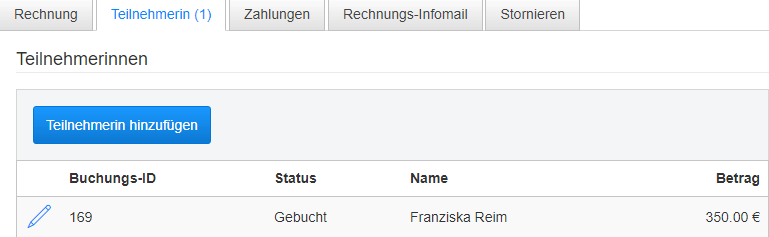
Variants with an asterisk or a plus sign after the group of people (e.g., participant*, speaker+) are likely to have little chance of success—even if they are more elegant. These are intended to remind the reader* each time that the footnote rule applies and that all genders are meant. Since this is hardly widespread yet, the meaning is certainly not immediately obvious. In a software context, there is an additional difficulty: an asterisk at the end of a word usually stands for a mandatory field, which may cause even more confusion about the meaning.
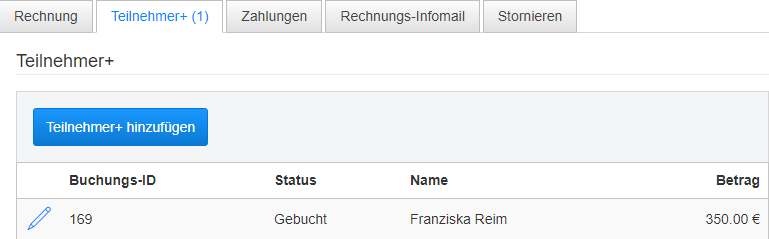
Economical gender-inclusive language
Shortened forms are the key to using fewer letters to be more gender-inclusive. There are plenty of possibilities and combinations: participant/in, participant/-in, participant(in), and participantIn are perhaps the most common. The first three are no longer considered quite as stylish, as they give the impression that the female form is the less important one, which is why it is excluded or relegated to a bothersome appendage of the more important word via a slash. In contrast to the paired form, such a spelling does not negatively affect the length of the text. However, it cannot be recommended without reservation either: as soon as a text addresses several people and an article or pronoun is to be placed in front, it becomes problematic. "Every participant" or "the CME points of the participating doctor(s) will be transferred to his/her continuing education account" hinder the flow of reading significantly. The second example would also be grammatically incorrect. Thoughtless word creations like "doctor(s)" can be avoided by using synonyms like "medical professionals."
Gender gaps and asterisks
Since this year, it has been possible in Germany to enter "diverse" as a third option in the civil registry. In terms of formulating texts, this means that gender is understood as a spectrum rather than a binary system. To reflect this, there are progressive symbols such as the gender asterisk * or the gender gap _, which include identities beyond male and female and finally give intersex and transgender people the space that the internal "I" once closed off. With "participants*" or "participants_," everyone without exception can feel addressed. The asterisk has already been experimented with diligently in many places, which is why you have surely encountered it at least once. Why don't we just upgrade the person designations in our software with it instead of publishing an article like this?
Among other reasons, because this variant brings a new problem for a group of people who are also often not given sufficient consideration in the design of websites and software: users of screen readers that read text aloud. These tools sometimes struggle with special characters: In the last sentence, the output would usually be "user-asterisk-in." Although the assistive tool can often be set so that such special characters are no longer mentioned, the aforementioned asterisks for mandatory fields—which have a completely different meaning and cannot simply be omitted—would then also no longer be read out. In any case, the result would not deserve the 100% accessibility seal of approval.
The asterisk doesn't solve these further linguistic complications either. Take the issue of forms of address, for example. Strictly speaking, non-binary individuals—those who do not identify as male or female, regardless of their biological sex—should not even be able to select the third option when registering for a conference. Under the new law, only applications from people who have a medical certificate confirming a "variation of sex development" are considered. And even these individuals do not automatically feel more comfortable with the "diverse" label, as the term gives the impression of being a vague catch-all for—to put it bluntly—everything else, rather than a recognized, equal gender.
Wouldn't it be better to avoid forms of address entirely at a conference? This excludes no one and would certainly be seen as progressive, but it presents organizers with the next hurdle when drafting emails to participants. Should you omit the salutation here, too? That feels a bit strange and impersonal, and at best only works for conferences that maintain a casual tone, like "Hello [First Name]." However, we know from many years of experience that the majority of events we support are a bit more formal, meaning a form of address is necessary.
These are at least two areas that require further solutions.
Rewriting, alternating, or addressing directly
For almost every word, there is a "gender-neutral" form or paraphrase, such as the present participle. "Teilnehmer" (participant) becomes "Teilnehmende," "Referent" (speaker) becomes "Referierende," and "Student" (student) becomes "Studierende." Sometimes this takes getting used to, such as when referring to "blogging individuals" instead of bloggers, "helping individuals" instead of helpers, or "organizing individuals" instead of organizers. Relative clauses like "all those who run a blog" can lighten the text, as can variations like "support staff" or rephrasing to "organized by." Texts are much livelier anyway when they aren't just a string of nouns and every sentence follows the same pattern. This also works for participant registration, or online registration! Since pricing tiers are very individual for every conference, we don't have any naming conventions for organizing teams (formerly "organizers") on our end anyway. Being creative is allowed— at least as long as you stick to the plural. As soon as you refer to a single participant, it immediately becomes masculine again. In places where a specific group of people is less important, we therefore use "person" instead of "participant" in Converia.
When revising the Converia manual, we also use more neutral phrasing. The texts must be easy to understand, and incorporating paired forms or gender asterisks seemed to hinder the readability of the finished chapter. Furthermore, we often alternate the subjects in our phrasing—sometimes referring to the female participant or chair, sometimes to their male counterpart. However, the problem of context is not insignificant. When a "female participant" is mentioned, does the statement really only apply to women? Think of a workshop that, according to the description, is aimed at female computer scientists. Does that mean other, non-female people who are knowledgeable in the field of computer science are allowed to participate? Or is that actually not intended in that specific case?
Where possible, address your readers directly. "Please remember to evaluate the conference contributions by the date mentioned above." This way, you bypass all gender-specific phrasing. For instructions and important notices, this also has the side effect that the statement is remembered longer because it is linked to a concrete task for the individual.
And what is the instruction for our conference software?
We haven't found the perfect solution yet. For gendering, we would prefer to establish a procedure that is as consistent as possible while avoiding all misunderstandings. For example, it must always be clear whether one person or several can be edited at the same time. If this is not clear from the wording, the weakness lies in the development, not with the users. The same applies to documents created by Converia. Our software automatically generates invoices or booking confirmations, for example. This shouldn't require a long setup phase; after all, Converia wants to save conference organizers time. Likewise, a manual shouldn't have to include another manual for decoding gender-sensitive language, including special characters.
What do you think: To what extent should gender-neutral language be considered in software development to be practical for conferences? Or do you think it only comes down to a functional interface? We would love to learn more about this topic to bridge the gap between aspiration and practice and make Converia as inclusive as possible. We look forward to your suggestions and opinions.