

The smartphone as a distraction
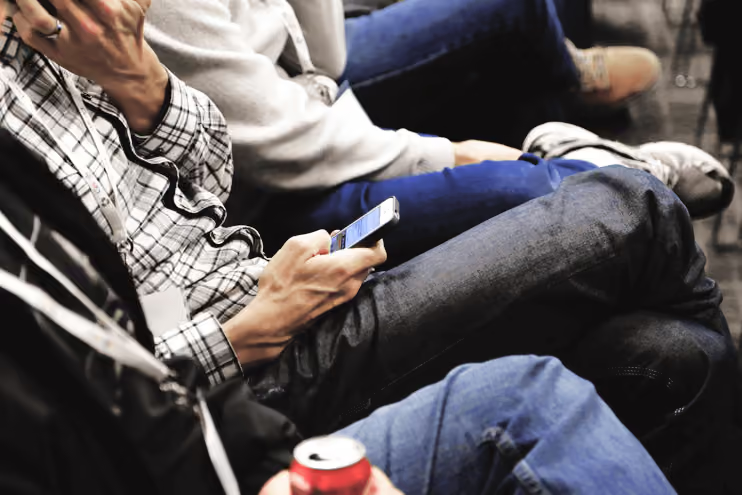
A strict smartphone ban during conference sessions is usually the last resort for organizers when speakers complain about an audience that prefers looking at their own screens rather than at the stage. Such a drastic method, which according to the IMEX study is supported by 40% of respondents, seems a bit out of place in 2016. Conference attendees are more connected to their mobile devices than ever before. It is more than likely that even the last holdouts will become smartphone owners in the future. It is, however, unlikely that this is just a passing trend. Organizers who want to implement a ban will likely face a fundamental question: where do you draw the line? Should the ban apply only to smartphones and tablets, or should it be extended to smartwatches as well?
What many find tolerable during presentations becomes a real problem in smaller groups, such as workshops. In these settings, it is quickly noticeable and disruptive when some attendees can hardly take their eyes off their screens. Unfortunately, this happens all the time. Most workshop leaders would likely feel a bit stuffy pointing this out to participants individually. No one wants to create an atmosphere reminiscent of a classroom where everyone feels they are being constantly scrutinized. After all, everyone signed up for the workshop voluntarily and paid for it, so a basic interest in the topic can actually be assumed.
The myth of multitasking
To ensure participants stay focused, a ban would actually make some sense—especially considering that multitasking does not exist when performing demanding tasks. According to psychology professor David Strayer, only about two percent of all people are so-called supertaskers, meaning they are truly capable of performing multiple tasks simultaneously without a negative impact on performance. For the remaining 98%, it is difficult to follow a speaker's research while reading or answering emails at the same time. Instead of doing several things simultaneously, people are actually just switching back and forth between tasks—without fully concentrating on any of them. Consequently, either information from the presentation is missed, or parts of the email must be read multiple times to fully grasp the content.
Speaking of emails: sometimes it is not the participants' fault that they keep checking their inbox. Some might like to give the speaker their undivided attention but have instructions to respond to certain messages immediately. If it were clear in advance that smartphones are not desired during the session, everyone involved could prepare accordingly.
When a ban on mobile devices is announced, it is not always met with rejection; in some places, it is surprisingly well-received. Europe's TED Director Bruno Giussani has only positive things to report from his experiment. Previous attempts, where participants were encouraged to keep their smartphones in their pockets or where use was only permitted in the last two rows, showed no success. The absolute ban, however, was followed without complaint and even enthusiastically embraced. The audience particularly appreciated the changed atmosphere in the room. Everyone present could focus on the presentations in peace instead of being in a constant competition to be the first to share the best quotes with their followers. It is therefore no surprise that when asked if the ban should be in effect for the next conference, every hand went up.
Focused even without a ban
So, should we stop having conferences without smartphone bans from now on?
That is likely not so simple. What has proven to be a complete success at some events could quickly backfire at others. Some participants might feel too restricted by a ban, which could then affect their perception of the entire conference.
A possible solution could be a middle ground where devices are not generally banned but integrated into the event. This allows you to influence how participants use their smartphones and tablets, thereby preventing them from becoming too much of a distraction.
This can be implemented particularly well in workshops. Here, it is recommended to use mobile devices to complete tasks. They can be used for research purposes, or for collaborative documentation of results where everyone adds their notes in real-time. During presentations in large rooms, graphics or statistics are often difficult to display clearly for everyone. It would be easier if everyone could access the information on their own device. However, never assume that everyone will be thrilled about this. Especially if the audience is not composed exclusively of digital natives and includes some who would prefer to voluntarily refrain from using their devices or do not own any. No one should feel disadvantaged or less informed. As an organizer, you usually know your participants best. Ideally, you also know their smartphone usage habits and can use that to decide if and how devices should be used during sessions.
Also, consider your own needs. If you want to evaluate the event promptly and therefore need feedback from participants on individual presentations, this speaks against a strict ban. With the help of the feedback function in an event app, the audience has the opportunity to rate a presentation immediately rather than two days later, when the memory is no longer as fresh.
Well-intentioned?
Bans imposed by organizers can sometimes have strange consequences. It seems a bit excessive when the first start-ups align their entire business model with the perfect implementation of such bans—initially mainly at concerts. A special pouch handed out upon arrival ensures that devices remain "locked away" during the event. As long as the owners are in the smartphone-free zone, it cannot be opened. If the phone is needed, the owner must leave the area to unlock it. This may be innovative, but it is also patronizing and ultimately shows that the organizer does not have much trust in the participants—not exactly a place where you feel comfortable as a visitor.
In any case, live updates from participants during an event do not have to be a bad thing. After all, it offers everyone sitting at their desk somewhere else in the world the chance to follow an event they would have liked to attend themselves. The only remaining question is whether their actual work suffers from the multitasking involved in following along—but at least that is definitely no longer your responsibility.