

But what actually makes a good program for scientific conferences?
There is no one-size-fits-all answer. It is more about the many small decisions that contribute to success and that organizers make consciously: Which content do you select? How much do you prioritize interaction? How precisely do you formulate your Call for Sessions?
To help you make the right decisions, we have compiled all our tips on program planning for scientific conferences here.
To start: Ask yourself these questions
Before you really dive into planning the conference, ask yourself five questions first.
They will help you step into the shoes of the participants, identify potential gaps, and make more targeted decisions about what really belongs in the program and what your conference might not actually need. Sometimes, a new perspective is all it takes to give the program a boost that has a major impact.
➡️Read the article here: 5 smart questions to improve your conference program
Better not: Avoiding typical mistakes
Planning mistakes are avoidable.
Once things go wrong, it is usually too late. As soon as the conference program is set, it is difficult or even impossible to reverse fundamental errors.
Too few breaks, too many parallel sessions, or a lack of clarity regarding the goals and target audience of the scientific conference: these are mistakes that often cost organizers dearly.
➡️Our article shows how to identify and avoid pitfalls early on.
Clear session descriptions belong in every program
Attend or not?
People clicking through a conference program have little time. This makes it all the more important that the content is clear, precise, and engaging. With the right description, you spark interest and ensure that sessions are well-attended.
This also solves another problem: A good session description clarifies who will really get something out of it and who might be bored. This helps participants make the right decisions.
This post will help you write compelling copy—and shows you what you should leave out.
➡️What matters and what should everyone submitting a session for your conference keep in mind? 4 essential steps.
Planning and conducting Q&A sessions
Questions from the audience are gold.
Provided, of course, that a) they are asked and b) someone knows how to coordinate them.
To ensure the Q&A phase doesn't become a chore but instead provides real insights, it needs the right structure. Learn how to create space for good questions, spark targeted discussions, and handle critical feedback with confidence using our tips.
➡️How many microphones you need for a Q&A session, how to handle tables, and how to get participants to ask questions— it's all here.
World Café, Fishbowl, and Open Space: Open formats foster exchange
Something that has never hurt a scientific conference: more interaction.
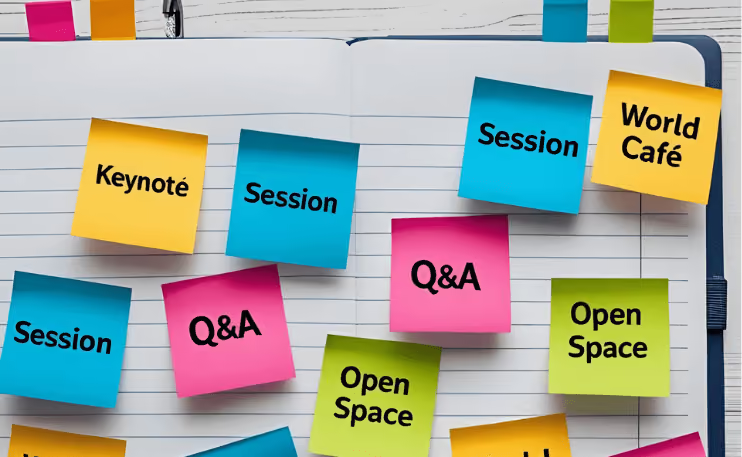
If you are looking for more exchange and participation, it is worth taking a look at alternative formats. In this article, we introduce Barcamps, World Cafés, Fishbowls, and Open Spaces, complete with practical examples and tips on which format is best suited for your needs.
➡️Interactive formats are ideal for gathering ideas and help to view a topic from multiple perspectives. Which one should you try out?
Don't underestimate the social program!
Of course, attendees come for the actual—the official—scientific program.
However, it is often the informal moments that are remembered most. This article shows how you can purposefully design a social program that enriches your conference, encourages exchange, and makes your event truly special.
A well-thought-out program begins with the right questions, formats, and ideas.
Virtual conferences need a framework, too
Digital does not automatically mean distant.
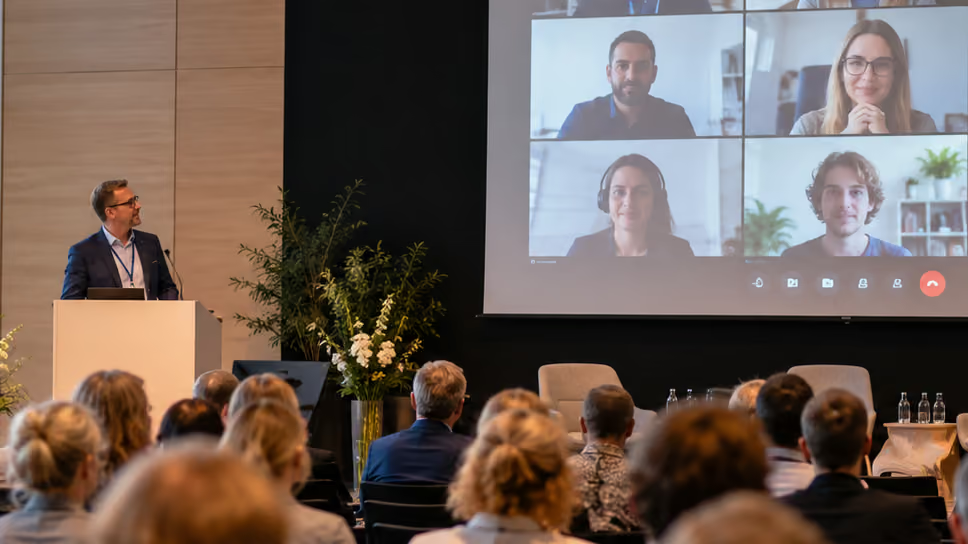
Even virtual conferences can flourish with a creative social program. A shared buffet or a city tour are not strictly necessary for fostering exchange. Digital excursions or collaborative puzzle-solving have already proven successful in practice.
➡️Our article on the topic shows you what a social program for digital conferences can look like and who has already implemented it, .
Are you organizing a scientific conference for the first time?
This presents a huge challenge, especially when it comes to the program. Don't worry, it's not as bad as it seems. We have some extra material in the form of an e-book and specialized training courses for academics.
Conference training for academics: Take your conference organization skills to the next level!
Use this Converia voucher code to get a 10% discount: Converia_Earlybird_10
👉 DESIGN successful events: Where creativity meets strategy!
Do you want to design events that exceed your attendees' expectations?
This training will ensure your events are inspiring and memorable!
👉 PLAN conferences stress-free
Would you like to start planning conferences with seasoned ease?
Get the methodological expertise you need for a successful project launch!
👉 EXECUTE conferences successfully
Would you like to start running conferences with seasoned ease?
Gain the methodological expertise to guide you through the event day with confidence and calm.